The man who measured forgetting with nonsense syllables: Ebbinghaus and the 2015 replication
· Education
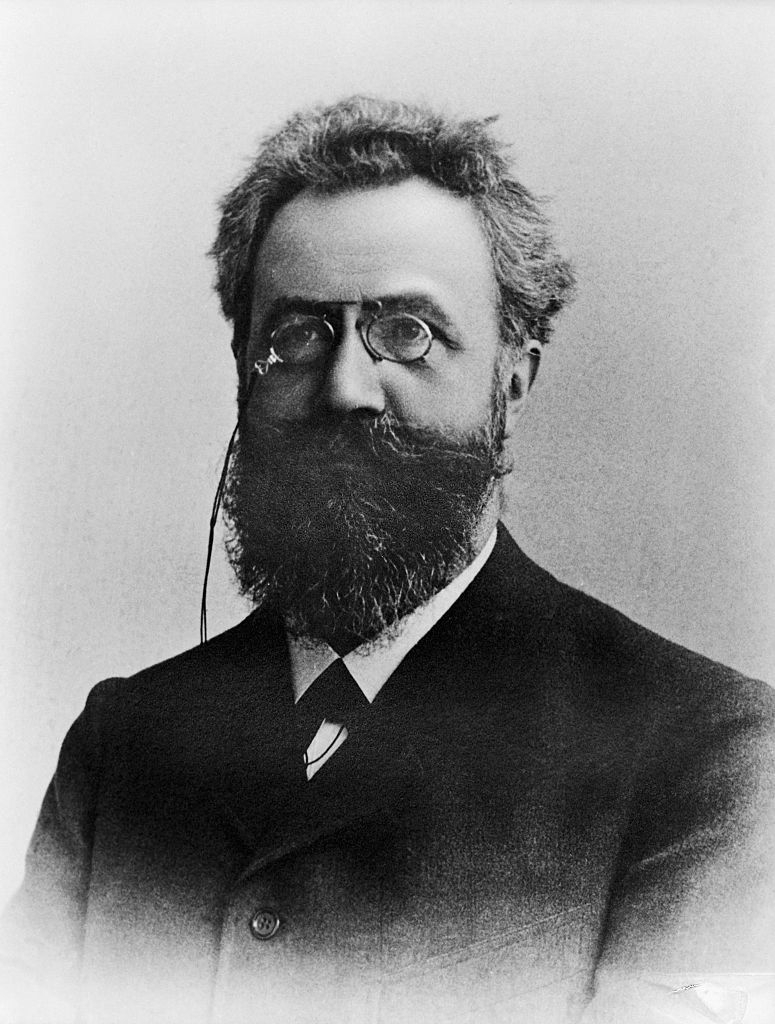
Hermann Ebbinghaus picked himself as the only participant in his experiments. In 1879 and 1880 he ran 163 double tests, and his material was nonsense syllables rather than words. One subject, one experimenter, the same person. A result from a setup that narrow is still being retested a century and a half later. In 2015 a team ran the experiment again from scratch to see whether it would hold up. [1][2]
Syllable lists and a stopwatch
Each series had 13 nonsense syllables, and one test used eight series. Ebbinghaus studied a series until he could recite it from memory twice without an error. Then he waited a set time and relearned the series to the same standard. He timed both stages. [1]
He did not count how many syllables he remembered. He measured how much time relearning saved. Subtracting the relearning time from the first learning time gave a difference he called the saving, and he took it as the measure of what remained in memory after the wait. The waits ran from about twenty minutes to 31 days: twenty minutes, one hour, nine hours, one day, two days, six days and 31 days. Time was counted from the moment the first learning ended. [1]
To turn the saving into a percentage he used a simple formula: the difference divided by the first learning time minus 85 seconds, times 100. The 85 seconds he subtracted stood for the time spent reciting the series from memory. [1]

Loss is fast on the first day, then slow
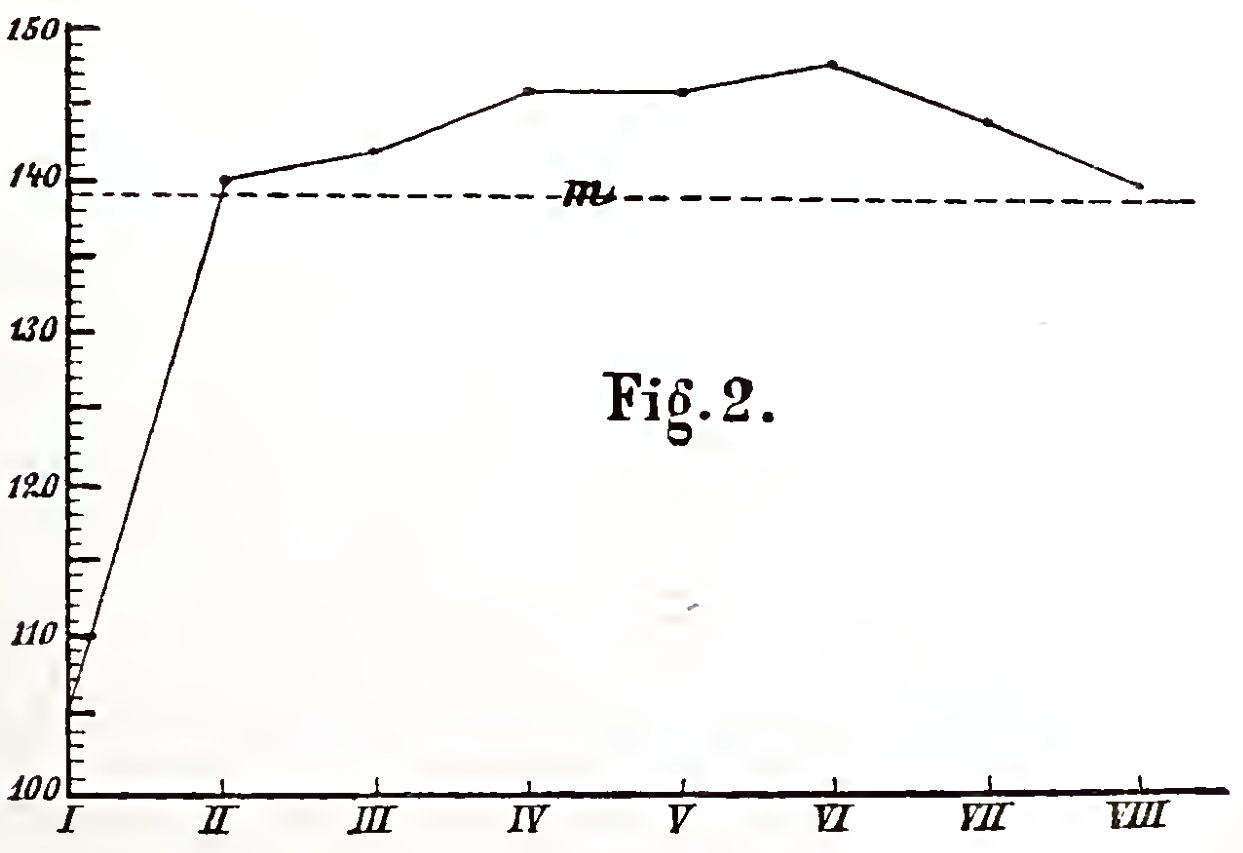
The figures in Ebbinghaus's text go like this. After nine hours about a third of the original effort was saved. After 24 hours about a third was always remembered. After six days it was about a quarter, and after a whole month fully a fifth. The first day takes a big loss, and the next twenty-nine days take a small one. That shape is what we now call the forgetting curve. [1]
He tried the same measure over short gaps too. With ten-syllable series the saving was 56 percent after 18 minutes, and with thirteen-syllable series it was 58 percent after 19 minutes. So less than twenty minutes after learning, more than half of the first effort was still there. [1]
The same experiment, run again in 2015
Jaap Murre and Joeri Dros of the University of Amsterdam repeated the experiment in a paper in PLOS ONE. There was again one participant: Dros, the second author, who was 22. They prepared 70 lists of consonant-vowel-consonant syllables that follow Dutch sound patterns, with 104 syllables per list. Syllables with too much meaning were removed. The waiting times matched Ebbinghaus's. One difference: Dros counted a row as learned after one correct recital, where Ebbinghaus had asked for two. There were ten lists per interval (nine for the nine-hour one), and on a typical day two or three lists were learned or relearned, four at most. Data collection ran from 1 December 2011 to 13 February 2012 and took about 70 hours. [2]
The four curves, Ebbinghaus's, two from older studies and Dros's, shared many characteristics in the authors' words. They parted ways at day 31. Dros's saving came out at 0.041 while the other curves sat around 0.20. Over the experiment his learning time had grown by 2.67 seconds per day, and after correcting for that drift the value rose to 0.137. [2]
Position inside a row mattered too. The first two and last three syllables were the easiest to learn, and syllables 11 to 13 were hardly forgotten at all. Most forgetting happened at positions 3 to 10. The authors also report that the equation Ebbinghaus fitted to his own data (a power function) fits that data very well, but fits the other datasets poorly. [2]
The authors also list the limits: one participant, only 10 repetitions per interval (Ebbinghaus did between 12 and 45), and no fixed time of day. Around the one-day mark the curve shows a small upward bump. The authors call it a trend and say an explanation involving sleep has not been tested. [2]
When repetitions are spread out
Ebbinghaus also tested how repetitions are distributed. Doing 68 repetitions per series within one day meant 7 repetitions were enough for an errorless recital the next day. Spreading 38 repetitions per series over three days gave a similar result on the fourth day: nine series were learned in a total of 56 repetitions. He states that the finding holds for limited conditions and that the sample was small. [3]
Later research examined the question at scale. The 2006 review by Cepeda and colleagues pooled 839 assessments from 317 experiments in 184 articles. The gap between study sessions and the delay until the test act together, and the gap that gives the best result gets longer as the time you want to remember grows. [4]
Ebbinghaus wrote that his results were certain only for his own case. [1]
Sources
- Ebbinghaus, H. (1885/1913). Memory: A Contribution to Experimental Psychology, sections 27-30 (Ruger and Bussenius translation) (accessed: 2026-10-09)
- Murre, J. M. J. and Dros, J. (2015). Replication and Analysis of Ebbinghaus' Forgetting Curve. PLOS ONE (accessed: 2026-10-09)
- Ebbinghaus, H. (1885/1913). Memory: A Contribution to Experimental Psychology, section 34 (accessed: 2026-10-09)
- Cepeda, N. J., Pashler, H., Vul, E., Wixted, J. T. and Rohrer, D. (2006). Distributed practice in verbal recall tasks: A review and quantitative synthesis. Psychological Bulletin, 132(3) (accessed: 2026-10-09)
Cover image: Portrait photograph of Hermann Ebbinghaus. Unknown author, Public domain.
