Is the coffee ready? A pot in a corridor became the world's first webcam
· Web
In 1991 a single filter coffee machine stood in the corridor outside the Trojan Room at the University of Cambridge Computer Laboratory. About fifteen researchers shared it. Coffee club members from other floors would climb several flights of stairs and often find the pot empty, because the people who worked through the night had already finished it. The system now remembered as the world's first webcam was built to end those wasted trips. [1][2]
A rig built in about a day
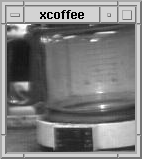
A camera was clamped to a laboratory stand and pointed at the machine. Wires ran under the floor to the Trojan Room, where a spare test computer held a frame grabber. Paul Jardetzky wrote the server, which captured the pot every few seconds, and Quentin Stafford-Fraser wrote the client. That client, XCoffee, showed an icon-sized greyscale picture of the machine in a corner of the screen. [1]
The picture refreshed about three times a minute. Stafford-Fraser explains, jokingly, that this was enough because the pot filled slowly, and that greyscale was fine because the coffee was grey too. At the end of January 1992 Bob Metcalfe visited the lab and wrote about the system in Comm Week. That is the earliest published record. [1][2]
Stafford-Fraser says the build took about a day. In today's terms it was a status indicator: a small panel answering whether the pot was full or empty. There was nothing clever about it. The problem was small and real, and the solution was sized to match. [1]


Then the web arrived
When the old frame grabber failed, its authors moved on and the system nearly faded away. In February 1993 Marc Andreessen proposed an IMG tag for embedding pictures in HTML, and in March a beta of NCSA Mosaic 0.10 could display inline images. In November 1993 Daniel Gordon changed the server to answer web requests and, with Martyn Johnson, connected the camera to the web. The setup was rebuilt around a new frame grabber. [1][2][4]
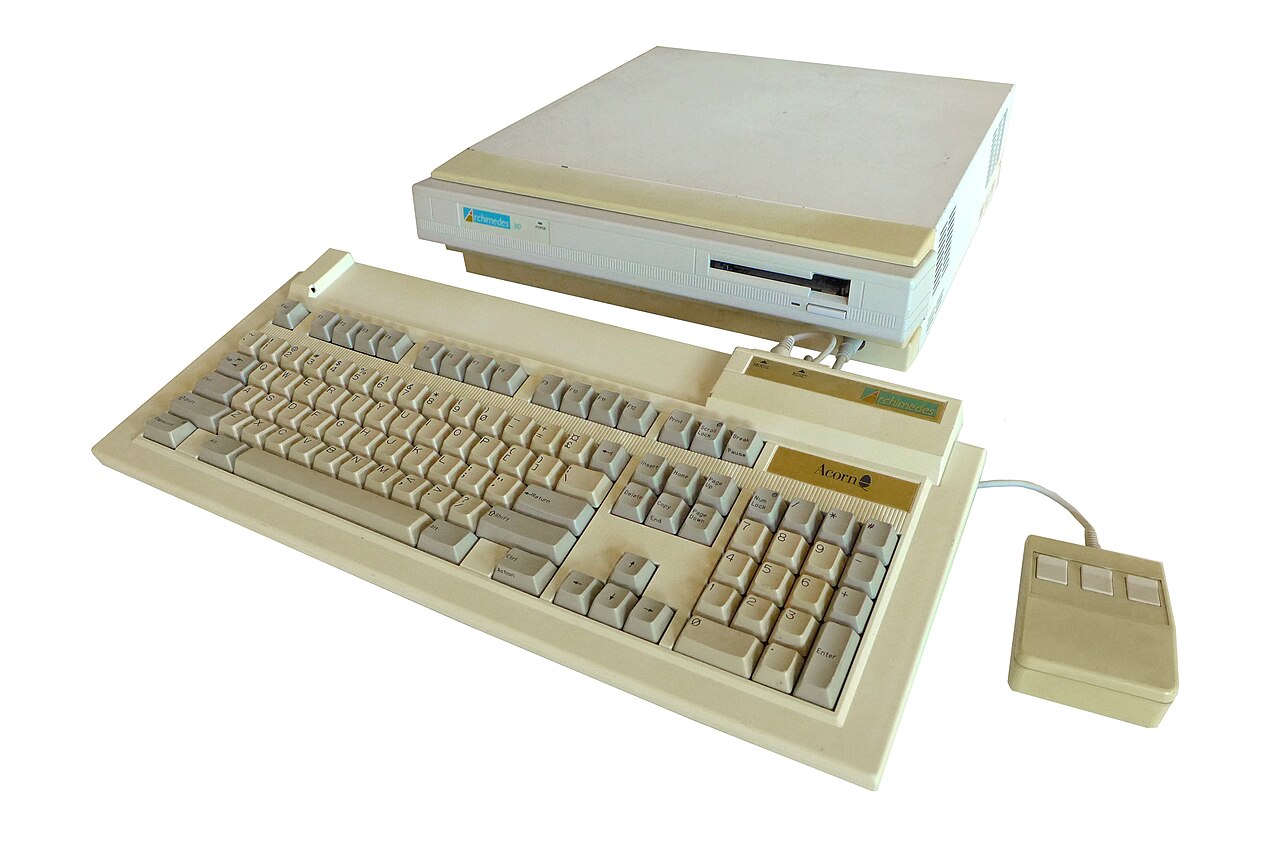
In the web version an Acorn Archimedes computer grabbed one frame per second, encoded it as JPEG and handed it to the server. The two talked through a new remote procedure call mechanism, MSRPC2, which ran over a network layer the lab had designed for ATM networks. The coffee pot was the first application to use MSRPC2. The lab's new remote call mechanism got its first application in a picture of coffee. [5]
The jokes on the page are still readable too. Because the lights in the Trojan Room could be off at night, a small lamp was pointed at the pot, and the page said that apart from travel fares you had to be a member of the coffee club before partaking. On 11 November 1994 a reporter from BBC Radio Cambridgeshire came to the lab to report on the service. The broadcast was relayed over the local network and recorded digitally. [5]
Why so many people watched
According to Cambridge's own timeline, image hits passed one million around 1996 and two million around 1998. Journalist Steve Farrar wrote that the page drew more visitors than King's College Chapel and called it the number one tourist attraction in East Anglia. The timeline marks both dates with question marks, so they are approximate. [2]
In 2001 Stafford-Fraser recalled that journalists kept asking why the page was popular. His short answer was that it became famous for being famous. He also compared the silent, black and white, low frame rate picture to the look of silent films. I think the comparison works because nothing happens on screen. You wait for the pot to fill or for someone to come and pour a cup, and the waiting turns into a small drama. When people today leave a bird nest, a railway line or a harbour on in a browser tab, the habit traces back to a 128 pixel coffee pot. [4][7]
In the same article he says millions of people viewed the image and many more saw news reports about it, and he adds that a $30 USB camera could now do the same job. The technical barrier fell very quickly. What remained was people's wish to look at a corridor. [4]
The switch-off and what became of the machine
In April 2001 it became known that the lab was moving to a new building in West Cambridge and the Trojan Room would no longer exist. The news reached the front pages of The Times and The Washington Post. In August the longest-serving machine was auctioned on eBay, with the proceeds going to coffee facilities in the new lab. Spiegel Online bought it for £3,350. [2][4]
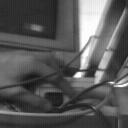
The camera went off on Wednesday 22 August 2001 at 10:54. Daniel Gordon, Martyn Johnson and Quentin Stafford-Fraser switched off the Archimedes together. The last frame captured shows the fingers of the three pressing the power switch, and it is hard to make out. The system had been taking pictures for about seven years and nine months. Stafford-Fraser predicted that webcams recording their own switch-off would become sought after because they are ephemeral. [3]
According to Wikipedia, the Krups machine bought by Spiegel was refurbished by Krups employees and switched on again in the magazine's editorial office. Since summer 2016 it has been on permanent loan to the Heinz Nixdorf MuseumsForum in Paderborn. The museum's own page presents a coffee machine in its collection as the first object monitored by webcam and links to a live stream. [6][7]
Stafford-Fraser also gives a joking piece of advice in his 2001 article: putting content on the web is no longer news, so if you want attention, switch it off. The pot did exactly that that year, and the Cambridge pages keep their old look. [4]
Sources
- Stafford-Fraser, Q. The Trojan Room Coffee Pot (Cambridge Computer Laboratory) (accessed: 2026-10-12)
- Stafford-Fraser, Q. The Trojan Room Coffee Pot Timeline (accessed: 2026-10-12)
- Stafford-Fraser, Q. Switch Off (22 August 2001) (accessed: 2026-10-12)
- Stafford-Fraser, Q. (2001). When convenience was the mother of invention. Communications of the ACM (accessed: 2026-10-12)
- Gordon, D. and Johnson, M. The Trojan Room Coffee Machine (Cambridge Computer Laboratory) (accessed: 2026-10-12)
- Heinz Nixdorf MuseumsForum. The world at your fingertips: history of the internet (accessed: 2026-10-12)
- Wikipedia. Trojan Room coffee pot (accessed: 2026-10-12)
Cover image: The cover shows an Acorn Archimedes A310, from the computer family that ran the camera (illustrative image). mikkohoo · CC BY-SA 4.0.
